
RESEARCH AREAS
1. Early parent-infant interaction and Infant Mental Health

a) The study of development of interactive patterns related to in/secure attachment using sequential analysis techniques and nonlinear dynamic analyses. The objective is to detect predictors that help to design intervention.
b) Factors in the rupture of reciprocity and continuity of the relationship associated with maternal insensitivity to infant signals. Relations with contextual variables are also studied. The combination of these factors affects maternal contingency and, therefore, conflicts in the dyad.
c) Program evaluation regarding the impact of PAPMI® (Programa de Apoyo Psicológico P/Materno-Infantil) on parenting and child outcomes. The studies focus on testing the impact of reducing parental stress, increasing parental sense of competence, and increasing the proportion of secure attached children.
2. Inconsistent socialization, child maltreatment and antisocial behavior
a) Determination of the factors associated with parent-child coercive relations and the development of child conduct disorder. Escalation and child abuse. Two levels of variables: First, the interactive patterns characterized by more aversive child behavior rate and maternal indiscriminate or not contingent behaviors to the child’s behavior and, also, a less positive reciprocity. Second, community relations: the effect of stressors on the parenting functioning, attention deficits and perceptual biases affecting parental interaction.
b) The study of competent parenting practices defined as the set of skills, knowledge and attitudes which supports and promotes the child’s optimal development, physical and psychological (emotional skills, cognitive and social). Study of the different dimensions of competent parenting practices: cognitive (perception of self-efficacy to parenting issues, knowledge, attributes and behaviors and expectations about their children’s problems), affective (satisfaction in performing the task; parental confidence), and behavioral (proper handling parenting problems and communication skills, use of interactive patterns that promote child development.

c) The study of interactive processes and parental practices that promote failures in the child’s socialization. This context will train the child in a coercive and aggressive interactional style that most likely s/he will apply in subsequent relationships. The most dysfunctional are the basis for the path into the early onset of antisocial and criminal behavior. Child abuse is the most extreme product of incompetent parenting practices. Victims of repeated abuse in their family, among other consequences, present deficits in their socialization and interpersonal skills. This makes it more likely for them to engage in antisocial and criminal activities.
d) Study of the relationship between adverse childhood experiences (ACE) and psychological maladjustment in adolescence and adulthood.
Within the framework of adverse childhood experiences, expert reports on child sexual abuse in the domestic setting were analyzed. The first Plan against the Sexual Exploitation of Children and Adolescents developed in Spain was also evaluated, as was the proposal for the second National Plan.
e) Case studies that illustrate the process and the effectiveness of certain interventions. There have been case studies of families with severe relationship problems and child abuse following an intervention plan that includes, among other aspects, the results of our basic research. In this scheme of intervention, the primary focus is on eliminating the episodes of abuse or serious conflict, the first area of work is on the factors that directly precipitate these episodes. It addresses the issues related to parenting practices: at a micro-level, on patterns of interaction that precipitate conflict and, at a more molar level, on perceptions, attribution style and discipline strategies and positive parenting. Moreover, given the characteristics of these multi-problem families, it is essential to work on environmental factors helping to discriminate between different sources of stress. The basic scheme of intervention is always adapted to the characteristics of each family, known after the completion of a comprehensive multi-method assessment.
f) Study on the use of the Internet by young children. Given the current importance of access to the Internet from a very early age, we conducted research to understand the Internet use of children aged 6-9 years old, as well as their parents’ perceptions, digital literacy and parental monitoring strategies to protect children from the potential risks associated with its use. At the same time, we recognise that the Internet also offers multiple educational and developmental opportunities, so it is essential that parents are aware of strategies that not only reduce the risks, but also help their children to reap the benefits that positive and safe use of the Internet can bring.
3. Resocialization and mental health in the prison population.

It includes:
(a) the study of the population’s knowledge of restorative justice: co-creation with the community and awareness-raising;
(b) evaluation of the needs of victims and offenders in restorative justice processes, taking into account mental health and the gender perspective;
(c) evaluation of mothers in prison, the presence of children in prison is not noticed by society.
4. Gender studies and violence against partners.
In the field of conflictive family interactions, the study of intimate partner violence and perceptions of same-sex parenthood is of particular interest. Our studies, in collaboration with other research groups, focus on three specific areas: (a) sexual intimate partner violence (b) same-sex partner violence (c) social perceptions of same-sex parenthood.
OBSERVATIONAL METHODOLOGY FOR FAMILY INTERACTION

1. The study of effective and efficient methods to train interaction coders
2. Assessment of psychometric properties of the coding systems: CITMI-R (Spanish acronym: Códigos de Interacción Temprana Materno Infantil – Revisado), CITMI-NB (version for newborns) and SOC-III (Standardized Observations Codes-III). They are available in English, Spanish and Portuguese.
3. The dissemination of the coding systems among researchers and practitioners suing new technologies and media.
TRANSFERENCE OF KNOWLEDGE AND RESEARCH RESULTS
There has been a sustained effort to transfer knowledge and results from basic research.

Area of treatment of families with problems of child abuse (school-aged children):
The intervention methodology applied on a set of 25 families was published in a book, available on this website (Cerezo, 1992). everal Case Studies were published in national and international journals. This methodology was spread in courses and in a two-year Master of the University of Valencia for psychologists working in Social Services. Many psychologists working in the Services for Children and Families (SEAFI) that were created in Valencia in 2002 were directly or indirectly influenced by this work.
Area of welfare and promoting good parenting practices in early childhood:
The Programa de Apoyo Psicológico P/Materno-Infantil® (PAPMI®, Cerezo, 1990) was developed and its pilot study was funded by the Regional Government. PAPMI® is a social innovation project, pioneering and ahead of its time, in which have participated more than 3000 babies with their parents. The PAPMI® is a service that addresses the entire population of newborns in a given area to support the parenting and promoting good attunement with babies during the first year of life. The goal is to promote the development of secure attachment, a resilience factor to subsequent psychological adjustment of the individual https://www.ipinfa.com/papmi/
The acknowledgment of the PAPMI® social innovation character was provided by the institutional support of the University of Valencia that promoted the creation of a spin-off company: Instituto Psicológico de Infancia y Familia (IPINFA) [Child and Family Psychological Institute], appointed by the University of Valencia Board of Governors (March 6, 2007). In 2018, IPINFA was awarded with the gold medal for its activity by the European Association of Economy and Competitiveness. https://www.ipinfa.com/
PAPMI® results have been presented in different international fora. Prof. Cerezo was invited to go to Dublin for a year to support and advice the development of services for children and families. The invitation was done by the Irish Health Service Executive (HSE; prior Health Board) the national health and social service agency in Ireland, the Children Research Centre and the Trinity College.
A new program inspired by, and adapted from, PAPMI® has been operating in challenging community contexts in the city of Bahia in Brazil. This international inter-university project has been funded by the Brazilian Government and coordinated by Prof. Patricia Alvarenga who had a one-year stay in the Unit Research in 2012/2013. This program has been published in a book by Springer publishers in English and German.
Several BOOKS have been published to transfer expertise and knowledge:
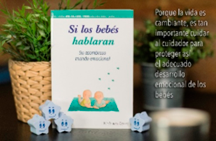
Cerezo, M. A. (2019). Si los bebés hablaran. Su asombroso mundo emocional. Ediciones Pirámide. A book that allows us to bring Science closer to families and professionals, interested in knowing more about the communication that is established between a baby and its main caregivers throughout its first year of life, using ‘dialogues between babies about their emotional experiences’. This has an impact on the child development of secure attachment.
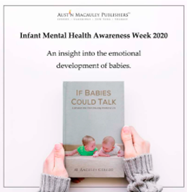
The book is also published in English: Cerezo M. A. (2020) If Babies could talk. A window into their amazing emotional world. London, Austin Macauley
It was included in the Infant Mental Health Awareness Week 2020 organized by Parent-Infant Foundation because the theme was “20:20 Vision: Seeing the world through babies’ eyes”
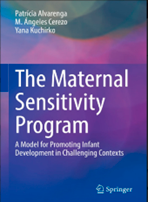
Alvarenga P., Cerezo, M. A. & Kuchirko Y. (2021). The Maternal Sensitivity Program: A Model for Promoting Infant Development in Challenging Contexts. Springer. The book presents the Maternal Sensitivity Program (MSP), a home based intervention in eight sessions to promote the maternal awareness of the mental activity of her baby and modelling maternal responsiveness and communication with her baby. It facilitates the mother’s understanding of her baby’s needs and emotions. There is a German translation.
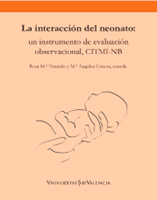

Trenado, R. M. y Cerezo, M. A. (2024). La interacción del neonato: un instrumento de evaluación observacional, CITMI-NB
The interactional information provided by the perinatal evaluation system, CITMI-NB improves the understanding of early communication. It also provides tools to help parents in their process of becoming a parent and bond with their baby. This instrument is not only relevant for research but also for different professional areas related to the perinatal period: psychology, nursing, social work or pediatrics, among others.
Our work in transfer of knowledge has also developed through agreements between the University of Valencia and different social entities.The agreements in their antecedent clauses explicitly mention the reputation of the Research Unit’s work. Likewise, this work has deserved praise and recognition for its quality and dedication, such as the letter addressed to the Hon. Mr. Rector of the University of Valencia, by the Minister of the Interior of the Balearic Government, Her Excellency. Ms. Catalina Cirer and the letter that, in turn, Mr. Rector sent to the director of the Research Unit.
A selection of these agreements follows:
2007- to present Agreement with el Institituto Psicológico de Infancia y Familia (IPINFA) empresa spin-off de la Universitat de València. Consulting, training and supervision.
2001- 2016 Agreements with Health Board (now: Health Service Executive) and other Irish agencies to develop child services.
1990-07 Agreements with Local Authority (Aldaia Town Hall- Social and Family Services) for the implementation and operation of the Programa de Apoyo psicológico p/materno-infantil. Prevention oriented program in early interaction and parenting to promote good practices with children and secure attachment. Funded by the Valencian Regional Government, Spanish Department of Labor and Social Affairs and the Local Government. The agreement was renewed annually until the management was transferred in 2007 to IPINFA, the spin-off of the University of Valencia.
1995-97 Agreement with Government of the Balearic Islands. Department of minors and Child protection. Methodological consulting, implementation and supervision of the ‘Programa Experimental para el Fomento de la Detección y Mejora de la Intervención con Menores y Familias en Riesgo de Maltrato’. Funded by the Spanish Department of Social Affairs.
1998-00 Agreement with Government of the Balearic Islands. Department of minors and Child protection. Methodological consulting, implementation and supervision of the ‘Programa Experimental para la Detección del maltrato infantil desde el ámbito escolar’. Funded by the Spanish Department of Social Affairs (Experimental programs)
1998-00 Agreement with the NGO “Apremi” (Valencian Association for Child Rights Promotion and Prevention of Child Maltreatment). Family Interaction: Child maltreatment cases anlaysis, clinical supervision and methodological consulting. Funded by the Regional Government of Valencian Community
1996-98 Agreement with the Regional Government of Valencian Community. Department of Social Services. Analysis and Evaluation of risk in child maltreatment cases. Funded by the Regional Government of Valencian Community.
